Tuesday, January 27, 2015

The Art of Math

             I lie quietly in the warmth of my blankets, watching the daylight filtering in through the blinds on my window, composed and ready for the new day. Then, the all-invasive, ungodly noise of my alarm sounds, and the few gorgeous moments of perfection when everything seems possible are broken.

            Still, I throw the blankets off with enough enthusiasm, and head out into the real world.

An hour or so later..things start to go bad.

          It’s 8:30 in the morning, and I’m hunched over my desk while a bald old man, with a big smile and slightly-offensive jokes, rambles on and on in a language I just don’t understand. Math.

           All around me, puffy-eyed and burnt-out looking college students peer short-sightedly at the board (as if looking harder and longer at those dizzying symbols is going to magically make them understand what the hell is going on).

          Me, I dutifully take notes on unintelligible (and often one-sided) conversations between the teacher and the worried-looking students up front, while doodling distorted math-y symbols on the edges of my paper.

One time, I even write a poem. Not a very good one, but a poem nonetheless.

        When my hour of torture is up, I quickly walk away, not wanting to fraternize with the other inmates. A little while later, I bump into some friends, and then all hell breaks lose.

        “I hate math...No, really I hate it. I HATE MATH!!!”

To this, I get a few glares -sometimes they are sighs- but no replies. Everyone I know has given up arguing with me - they have left me to rant and rot in my irrationality. For really, they are the rational ones, and I am the irrational one. Why do I even take math if I hate it and complain about it so much?

Why do I take a Calculus class if I’m not a math person, and if it’s not even a requirement for graduation? Why do I take a class that I so obviously hate if no one is forcing me to take it?

These are all questions, I asked myself and others asked me even as I wailed about integrals, derivatives, and axes.

            It took me a while to figure it out, but I think that I’m drawn to math because it is so mechanical, and perfect, and logical: all those characteristics that are not present in the real world. Math is always truthful - there are no opinions, and perspectives, and paradigms here - it’s all about the truth.

           This subject of absolute truth is exactly the opposite of the subject of art, and the exact opposite of the world. But can an entire subject exist devoid of art?
           I want to find the art in math - the flowing, the irrational, the innately human art of math, and I think I’m already starting to find it.
           Far from being the creatively devoid formulaic subject, math has some amount of flexibility to it. And its furthest reaches, on the very edge of our math knowledge, exist quirks and faults where all rules are abandoned, and the numbers are just as unpredictable as humans. 
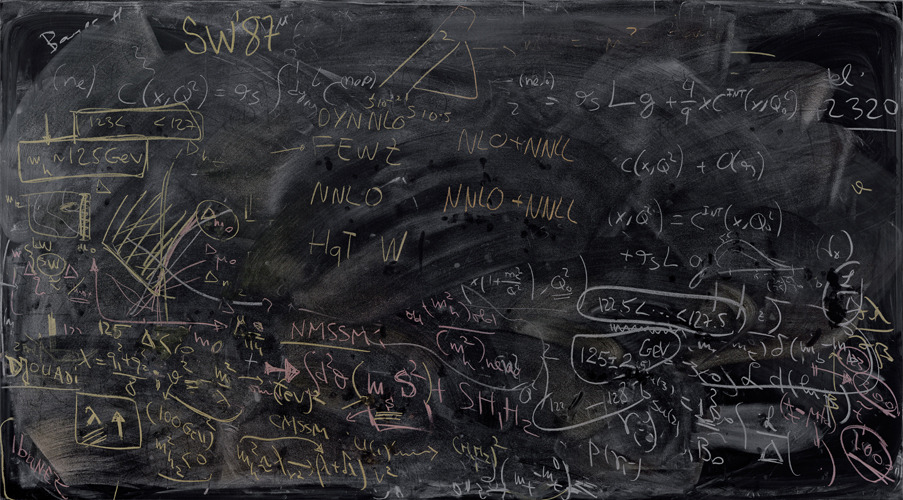

Infinities collide, and seemingly normal curves twist into psychedelic shapes. It feels like we’ve only been dealing with elementary math for so long where everything is so obvious - just like how the alphabets are logical and true, but when put together they can really create art...Maybe the new edges of mathematical knowledge are what really matter, and even thinking about it is quite exciting (though I would hardly consider boring ol’ Calculus a thought-provoking subject...but maybe further down the line or if I just look closer, I’ll be able to see uncanny and slightly crooked connections and quirks).

Monday, January 19, 2015

It's all in the Moments

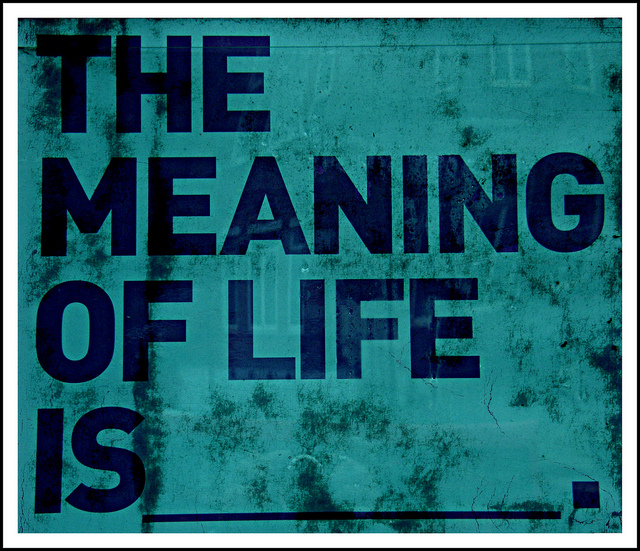
                Every psychoanalyst/philosopher ever has been obsessed with finding the purpose of human life. I mean, it is a noble goal to work towards: revolutionizing the culture, and saving the world from its own mundanity. And it’s a sensible question to ask: What are we doing here really?
                 But just because the question is noble and sensible, doesn’t mean its answer has to be so too. Although (almost) all conjectures for achieving the purpose of life involve being happy - most of them disagree on the precise definition of said happiness. The variety of the definitions of happiness have one thing in common, however, and that is a nobility, sensibility, and grandeur as expressed by the very question they are answering.
 
From: www.layman.org
             To the great philosophers of the West (as far as I have studied them...which is not very much), happiness is a transcending ideal. The moment one is truly happy, one is enlightened, set above the rest, and -in a way- more than (less than?) human. 

             Some (I don’t want to point fingers but...IT WAS PLATO!!) say happiness is living in a just and peaceful society (a.k.a. utopia ugh. Read what I think about utopia in my Utopia Theory here), and others say that happiness is finding what you are good at, and doing it well (Aristotle). Even Abraham Maslow believed that only the elite few - the top shelf - would be able to achieve true happiness (or self-actualization). 

Happiness, true happiness, to these people is not an everyday life occurrence - they probably define laughter as the masses’ forceful exhalation of air when they are confronted with something they do not quite understand. They probably consider relationships as a means for survival, and a stepping stone towards the real deal --> self-actualization.

They probably think that we the ignorant public have no idea what it is to be happy, but my ignorant mind tells me that happiness is in the little moments like laughing over some forgotten infectious joke with a friend, an afternoon spent talking when you find yourself staring into the depths of your companion’s soul, a particular look from a familiar stranger a bus stop, or holding hands with (or even talking to) your first crush. Happiness is not some sort of renunciation of humanity - and being a perfect person, it is the most human of things - it is an emotion that is a symbol of all that we live for on this planet.  
From: www.quoteeveryday.com


           Happiness isn’t a state of mind, it cannot be captured. It is just a feeling, an ephemeral moment of realization and connection. Far from being the stepping stone to demi-God status, being happy is really the feeling of realizing that you are a loving and loved human. 

Monday, January 12, 2015

The Utopia Theory

             Sometimes I wonder at animals, especially the peaceful-grazing-on-the-meadow-ones; is life awful for them? Or are they unaware of their own boredom because they have witnessed nothing else?
       Isn’t the human idea of utopia something like this uneventful existence - world peace, and no justice to fight for because we have it already. What would life be if we were all satisfied? Like a herd of cows in a quiet, flowering valley?
                 Utopia means perfection, which means that there is no need, or even chance, for change. A utopian society would be one where we would all know that we are living in the closest thing to paradise on Earth; it would be a society where we wouldn’t have ambitions or secret desires or dreams. Actually an unchanging, satisfying utopia sounds a lot like dystopia…
              Reaching a society of justice and fate sounds hard enough, but imagining sustaining it. The world would be so scared of backsliding into the terrors of war and injustice that it would stand frozen so as to not fall off the narrow platform of utopia. It would a world that is stuck in a perfect condition - a beautiful, flowering meadow if you will. But what is a flowering meadow to one generation may the fires of hell to the next. Imagine the children of a society that has fought its way to the pinnacle of perfection - a peaceful world; imagine how they will feel in a society that has taught them that there is nothing better than what they now see, and nothing to do other than their meaningless (at least to them) jobs that will help maintain a perfection that they do not understand. Imagine these children in their yearning for change, and their failure to encounter it. They will feel like birds caught in cages, fish trapped in blocks of ice. To them, the utopia of their parents’ is a meaningless machine that they must keep running without understanding its significance; to them, their parents’ utopia is their prison, their dystopia.

It's only beautiful for a while
(Source: deviantart.com)
       Would you want to stay in a quiet valley, skipping among the daisies (and dandelions), having everything you need, if that is the only place you can ever be? Would you want to be imprisoned in a perfection that you cannot understand?

Maybe a sustained utopia will end up being dystopia.

Tuesday, January 6, 2015

To be Invisible

I’ve been waiting for this moment for years, and it has finally arrived...
I’m finally taking a class where we get to read Plato’s Republic!!! It was a moment of accomplishment for me when I spied it on my Philosophy book list, but things have gone downhill since.
I don’t really think I much agree with Plato, but the question of the ring of invisibility did intrigued me.  

There are times when I feel like I’ve melted into a puddle of self-pity, inviting others to step on me. There are times when I wish those judging eyes wouldn’t watch me so. There are times when a ring of invisibility is just what I need.
And it is during these times that I quietly slip on the battered ring which resides in my pocket, and disappear.
I sit close and stare at the bird in the midst of his carefree dance, feeling simultaneously intrusive and harmless. His plumage is of colors unseen, and his movements are of a fluidity us worrying humans will never feel. Here, in the loud but peaceful floor of the Amazon rainforest, I am glad that I can see him, but he can’t see me.
To visit places unseen, and to travel alone and unknown.
Then I’m in the narrow gaps between the strangers in the nameless, lifeless crowd of commuters on a Monday morning. I watch them: each wrapped in their own little bubble and worrying over their own worries, but also painfully aware of the hundreds around them. I see their insecurities through their transparent walls, and look away. The feeling of another pair of eyes, even invisible ones, must only hurt them more.
I return to sit under a tree in a suburban park - nature dotted with humans in their weekend-selves. Through my back, I feel the throbbing life of the tree behind me, and I sit unmoving for fear of losing this connection. I laugh aloud in my head when I think of what a sight I would have been if people could see me.
I listen to my footsteps echo at the local mall, imagining the many feet that must have returned again and again to these floors in the daylight- searching for something that cannot be bought.


When I finally pull the ring off, it is in fear of going silent. Invisibility is a freedom from society and all its restraints, but while it sets your body free, it locks your voice in a cage. Visibility is the high price we pay to have a noticeable opinion.
So while my flights of fancy with the Ring of Invisibility are perfect in every way, they are impermanent because I wouldn’t give up my voice and opinion for anything.


Tell me what you would do if you found the Ring of Invisibility :)

Wednesday, December 31, 2014

The Joys and Frustrations of New Years' Resolutions: Happy 2015!

         The latest New Year's trend seems to be resolution-bashing; looks like many have lost faith on the idea of creating goals that they'll eventually give up on, and have taken instead to laughing at those who do make such goals. This may be a trivial thing -nice for some laughs- but discouraging someone from trying to progress and reach a point of ambition is never small or funny.
              So what if we never keep our New Year's resolutions? So what if we almost always give up?
That's just one of our proud and distinguishing traits as humans - we trip over an abnormally large number of times (I blame toes - does anyone really know any unique uses of toes? They're existence seems to depend on the pain they cause when they are stubbed on short tables). But giving up pon our goals, defaulting, and tripping down is not such a big deal. The underlying reason for goals is trying to become a better person. Their whole point is striving towards self-improvement -the feeling of acknowledgement is just an added bonus. The real gain of goals and resolutions and guidelines is from the growth and the learning and all those good things.
           So really, New Year is not the only time for fresh starts, you could wake up one morning and just decide to make new goals to strive towards. Make goals and resolutions. Break those goals and resolutions. Now start again.
             That's what life is all about- working your way up to being the best person you can be, and that person can change everyday (causing your goals to change everyday). Making goals for self-improvement creates purpose, and just the slightest hint of purpose makes happiness much easier to come by. You're living your life to the fullest when you're working towards making yourself the happiest person you can be.
          So I'm going to say Happy New Year even if January 1st isn't the only day for new beginnings. Make your resolutions, have a great time, and don't worry about times you fail or give up - because then you get to the fun part of starting again with new or similar goals.

The only thing to remember is that if in any case, the road to fulfilling a goal is making you miserable, it's time to stop. Goals are meant to create happiness: in the road to their fulfilliment, in the joy of their sense of accomplishment, or in the tepid frustration of the failure they create

Monday, December 22, 2014

The Truth in Your Eyes

             It’s winter solstice today- the apex of the cold and dying, and the beginning of the rejuvenation - a rebirth. But for now, the dying is all we have. The snow might be a happy distraction from it all in some places, but here in California, the bare trees shiver with the winds as the leaves lie browning on the ground.
               But it doesn’t matter really; Christmas is right around the corner, and my house is in full on Holiday mode. I walk around the house singing Joy to the World as my brother trips over the decorative red ribbon I’ve drapped artistically around my room. We have intense competitions (like coin flipping) to see who gets to lick the cake-dough-spatula (which, for the record, might be my favorite food in the world). The neighbors’ loud christmas music is translates through the walls into a soft background track, and the world is just a feel-good Holiday movie. Despite the dead world outside.
           Everyone is happy during Christmas time - even those hiding behind their Scrooge personas, but I find it to be fake. It is a happiness that is created by the holiday atmosphere, and this expectation of joy that is laid on this time of the year. This happiness is like a sugar high, lasts a few hours (days in this case), and then your dropped back into the mundanity of your normal life.

Nobody wants to talk about the gradually wearing away of this energy when they’re full of it. Except for eyes. Eyes just don’t seem to be fooled. They are the windows to the soul - an overused Bible verse (Matthew 6:22), but a hugely significant one.
EyesAreTheWindowToTheSoul.png

              Eyes are the windows to the soul - they are the medium through which we can communicate our innermost feelings when our minds and our mouths simply won’t allow it. Even as lies flow out of your being like water, eyes shimmer with the truth.
              None of us are really brave enough to bare our souls, and pour out our raw emotions (with the exception of poets, though they do have their paper to hide behind). None of us can really walk around, being absolutely genuine. It’s a human thing, a societal thing - all our lives we’ve been told to cover up: clothes, etiquette, and the whole “Silence is golden” thing. We live in a world of lying to be perfect, but eyes just don’t conform to its rules, no matter how compliant the rest of the body is.
             Eyes tell the truth about a person when all of their body is trying its hardest to cover it up. Eyes have never conformed to the rules of society - when one is happy, they are happy; when one is sad, they are sad; when one is conflicted, they are conflicted. They bow to no expectations, and listen to no societal rules. Eyes are the original rebels, and they help keep us from over-complicating the world.

Behind your frequent and hollow laughs, your sing-song voice, and your silly puns, your dead eyes are sending out an SOS.
Your ragged clothes, and raspy voice combined with that angry expression on your face don’t scare me, because that haunted look in your eyes tells me that you’re scared yourself.

You bow your head, arrange your face into a sombre expression, and start talking again. More sternly this time. But there’s something there that wasn’t before; a jovial spark in your hawk-like eyes that tells me that the phone call that you just took gave you the best news of your life.